ServicesCity Water Filtration
City Water Filtration in Carson
We install carbon filtration sized for treated city water, so the chlorine taste and smell stop showing up at your tap and in the shower. Before anything is installed, we explain what the system costs now, what it needs each year and how long the media should last.
What city water filtration does, and where it stops
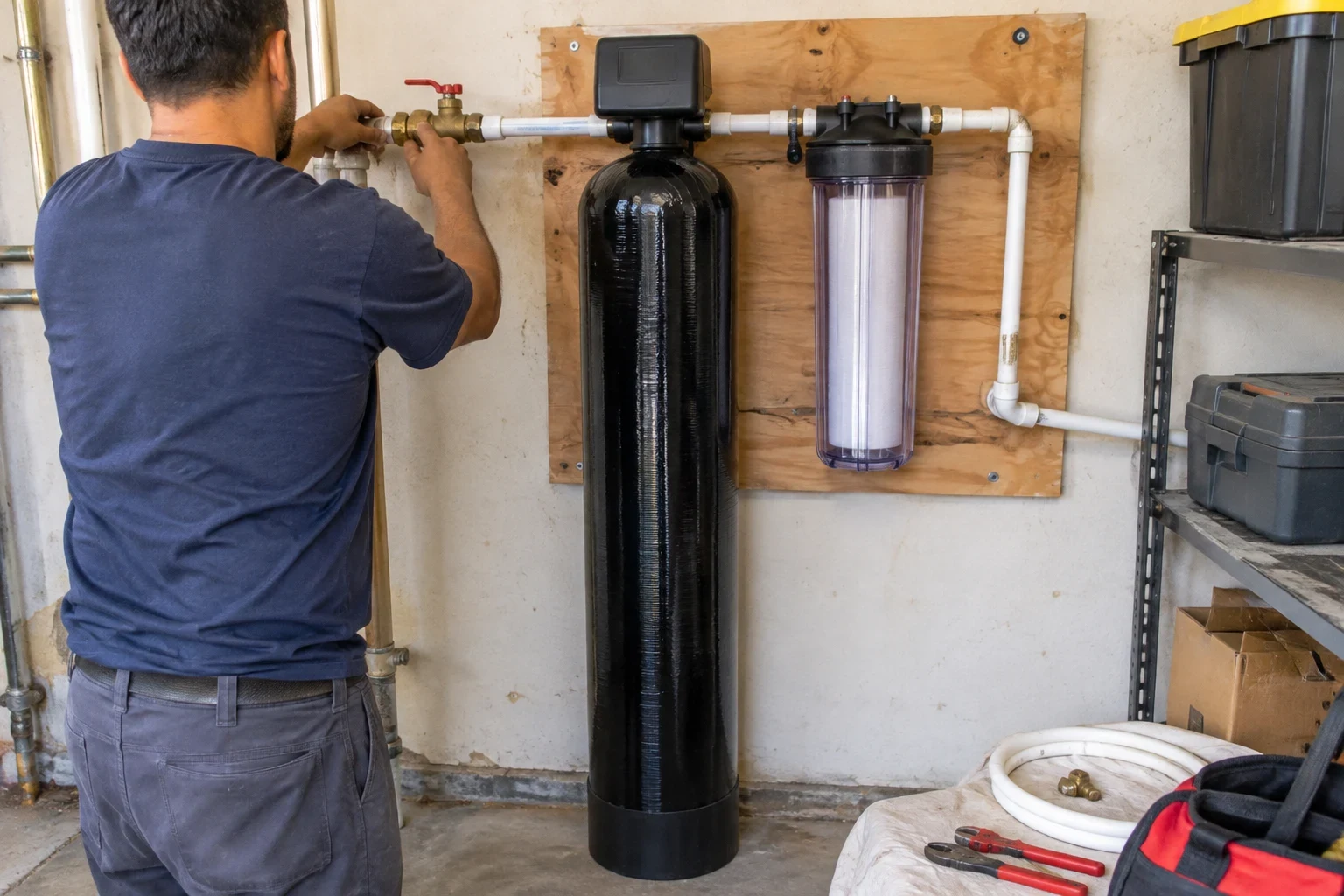
Municipal water is disinfected before it reaches your home, usually with chlorine or chloramine. That treatment protects the supply, yet it leaves a taste and odor you pick up in morning coffee, in ice cubes and in the steam rising from a hot shower. Our city water systems are built for exactly that water: a sediment cartridge up front, followed by a tank of carbon media, plumbed in where the main line enters the house.
We are clear about the limits. Carbon gives you water that tastes and smells clean at every faucet and showerhead. For drinking and cooking water polished further than carbon can manage, reverse osmosis under the kitchen sink is the better tool, and we will tell you that directly.
The number we care about most is the cost of owning the system. A correctly sized carbon tank runs for years with modest upkeep, and we set those figures next to what pitcher cartridges or bottled water would cost you across the same years.
What the installation includes
Sized to how your home uses water
We count bathrooms, note the main line diameter and ask how water gets used day to day. A tank that is too small exhausts its carbon early and can pull down pressure, so the sizing decision shapes everything that follows.
Sediment prefilter
This cartridge sits ahead of the carbon and traps grit and flakes of pipe scale. It is the low-cost piece you swap out, and by catching debris it spares the carbon bed, which is the costlier part to renew.
Catalytic carbon tank
We choose carbon media made for both chlorine and chloramine, since standard carbon is weaker against chloramine. A self-backwashing valve periodically loosens the bed so it keeps working evenly for longer.
Bypass and isolation valves
A bypass keeps water running to the house while a cartridge is changed or the tank is serviced. Clearly labeled isolation valves mean anyone doing upkeep later can find the right handle in seconds.
Careful plumbing at the main line
Licensed plumbers in California make the connection to your main line. Joints are clean, the tank is properly supported and the finished work looks orderly, whether it sits in a garage or along a side wall.
Coverage on the equipment
Your system is covered by our free 3-year warranty on all units.
When city water filtration starts to make sense
Shower steam with a chlorine smell
If a hot shower fills the room with the scent of a swimming pool, chlorine is coming off the water. Filtering where the line enters the house deals with it at the shower, the tub and the kitchen sink together.
Pitcher cartridges on repeat
Replacing a pitcher filter every few weeks seems inexpensive each time you buy one. Totaled across a year, it often costs more than maintaining a single carbon tank and changing a prefilter now and then.
A pantry full of bottled water
Carrying cases in from the car each week adds up in money, shelf space and plastic waste. Good-tasting water straight from the kitchen faucet usually brings that habit to an end.
Flat-tasting coffee and tea
Chlorine dulls flavor. Many people first notice filtered water in their morning cup.
Grit in faucet screens
When fine particles keep building up in aerators and showerheads, a prefilter pays for itself through cleaner fixtures and appliances that last longer.
How the work unfolds
- 1
Begin with a phone conversation
Tell us what you notice in the water and how your home is plumbed. If city water filtration suits the problem, we say so, and if a different system makes more sense for you, you will hear that too.
- 2
A look at the main line
We locate where the supply comes in, note the pipe material and measure the available space. You get the recommended tank size, the upkeep intervals and the expected carbon life in writing.
- 3
Installation day
We cover the floors and work area first. The main is shut off briefly while the prefilter, carbon tank and bypass are plumbed in, so water is usually off for only part of the visit.
- 4
Rinse, inspect and clean up
The fresh carbon is flushed, each joint is checked for drips, and we show you how to use the bypass and change the prefilter. We clean the area before leaving, and you know the date of your first cartridge swap.
What moves the cost of city water filtration
Because we offer free install (we cover the cost), what you are really weighing is the equipment and what it takes to maintain it. A system is best judged by its cost across its working life, not only its price on the day you buy it. These factors shape both.
- Tank capacity and flow
- Homes with several bathrooms call for a larger tank so pressure holds when more than one tap is open. More carbon in the tank also means a longer stretch before the media is due for renewal.
- Carbon media grade
- Catalytic carbon carries a higher up-front price than standard carbon, yet it treats chloramine more effectively and wears more slowly against it. Across several years, it frequently works out cheaper.
- Cartridge replacement schedule
- Prefilter changes are the recurring expense. The interval depends on your water and how much your home uses, and we quote a realistic schedule instead of a best-case one.
- Access and the condition of existing pipe
- An accessible main line in sound condition keeps installation straightforward. If the pipe at the connection point is old or corroded, we show you what we found before any added work goes ahead.
Questions about city water systems
Something not covered here? (310) 362-9655
Does it treat chloramine as well as chlorine?
Yes, as long as the media suits it. Standard carbon handles chlorine well but struggles with chloramine, so we use catalytic carbon designed for both. It also usually lasts longer when chloramine is present.
How much upkeep is involved?
Mostly changing the prefilter cartridge, which takes a few minutes after you turn the bypass. The carbon tank backwashes itself on a timer and runs for years before the media needs replacing. You get the expected intervals on install day.
Will my water pressure drop?
Not when the system fits your home. A pressure drop after filtering usually comes from an undersized tank or a prefilter left in too long. So we match the tank to your flow and let you know when cartridges are due.
How is this different from reverse osmosis?
City water filtration treats water where it enters the house, so every tap benefits, and it targets taste, odor and sediment. Reverse osmosis sits under the kitchen sink and gives drinking and cooking water a finer level of filtering. Many households run both.
Does a warranty come with the equipment?
It does. Your system includes our free 3-year warranty on all units, and we explain what it covers before you decide on anything.
Weigh the long-term cost of a city water system
Give us a sense of your home's layout and what bothers you about the water. We will recommend a size and lay out the upkeep and the long-term cost, so you choose with the full picture.