ServicesWell Water Filtration
Well Water Filtration in Carson
We fit filtration systems to homes on private wells, with media chosen for what your water actually carries. Each option comes with its purchase price, its upkeep and the expected life of its main parts laid side by side, so you can pick the one that still earns its keep a decade on.
Filtration Matched to Your Well
Well water changes with the ground it passes through. One well brings up fine sand and silt, another carries dissolved iron that turns orange at the faucet, and a third smells of sulfur the moment the tap opens. A filter that suits one of these can clog within weeks on another, so the first job is understanding your water before choosing anything.
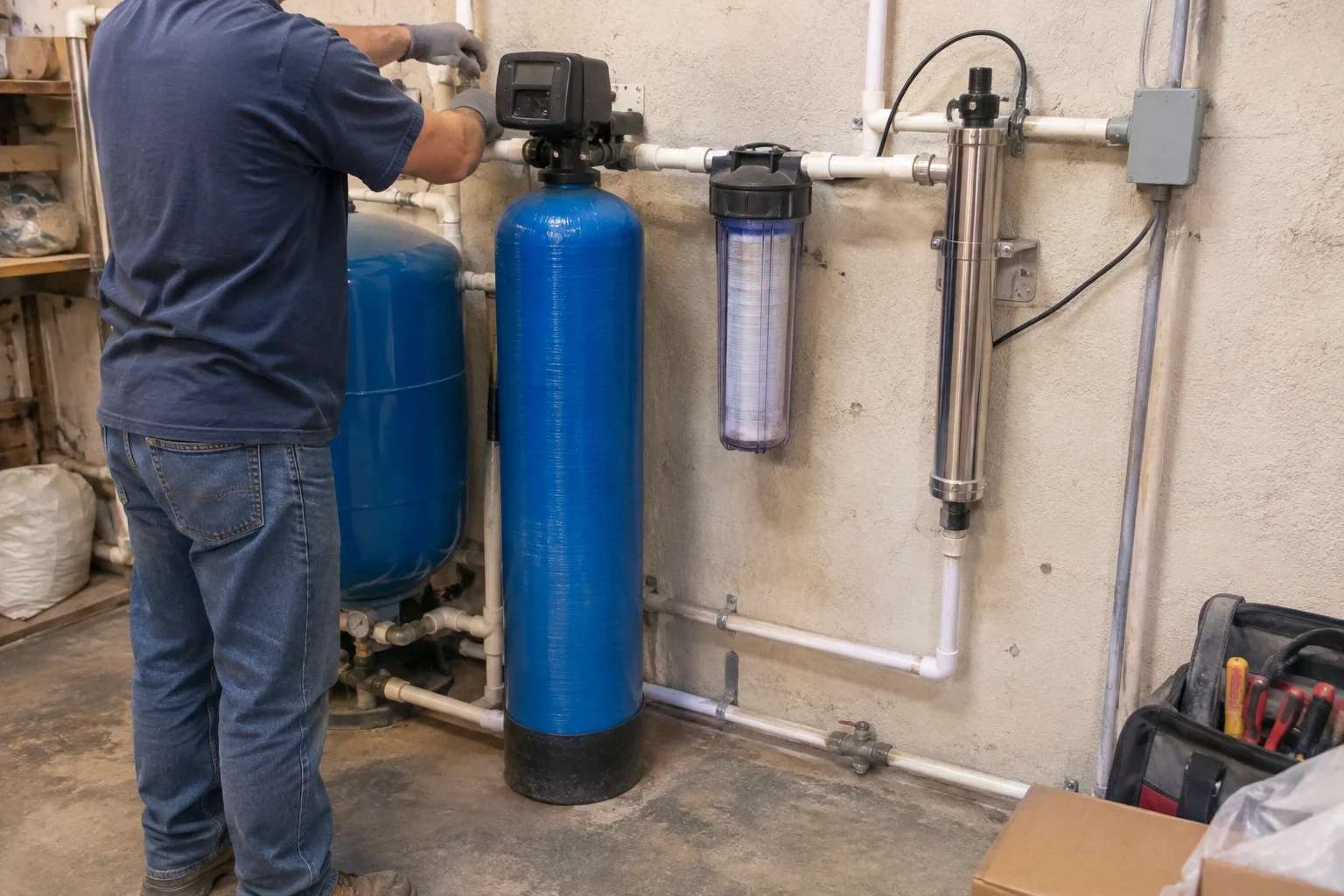
We look at the full picture: your pressure tank, the line coming in from the well, how many people use water in your home, and any lab report you already have. From there we recommend a system and show you, in writing, what it costs to install, what it costs to keep running, and how long the main components should last.
Some homeowners on wells around Carson also want a dedicated drinking water tap. If that is you, we can pair this system with reverse osmosis at the kitchen sink.
What the Work Includes
- A look at your well equipment
- We check the pressure tank, the incoming line and the space available near where water enters your home. Tight spaces and older fittings shape what we can install cleanly.
- Sediment protection first
- Most well systems start with a sediment stage that catches sand and grit. It protects everything downstream and keeps finer media from fouling early.
- Media chosen for your water
- Iron, sulfur odor and taste problems each call for different media. We choose based on what your water shows, not on the largest tank we could sell.
- A careful, serviceable install
- Our plumbers hold California licenses and fit shutoff and bypass valves on every system. Filters can then be changed while the rest of the house keeps running water.
- A written upkeep schedule
- You leave with a plain list of what needs changing or checking, and roughly how often. That schedule is part of the price comparison, not an afterthought.
When Your Well Water Needs a Filter
Orange-brown staining
Rust-colored rings at drains and along the toilet bowl waterline are a typical sign of iron. If it is not treated, it also builds up inside fixtures and appliances.
Water that smells of sulfur
A rotten-egg odor, usually worse from the hot tap, is one of the most frequent well problems, and the right filtration can deal with it.
Sand in screens and aerators
Having to rinse sand out of faucet aerators or appliance inlet screens again and again means sediment is passing through.
Hazy or strange-tasting water
Cloudiness, a metal taste or a dull flavor can each point to something a filter should catch, particularly when the change is recent.
Filters that plug up quickly
When a current filter loses pressure in a matter of weeks, it is too small for your water. Swapping in the same model just repeats the expense.
How We Handle a Well Filtration Job
- 1
First, a phone call
We ask about your well, what you see or smell at the tap and any recent lab results, so we know what to check when we come out.
- 2
An in-home visit
We inspect the equipment and the space and walk you through your options, each with its install cost, upkeep cost and expected lifespan laid out together.
- 3
Installation
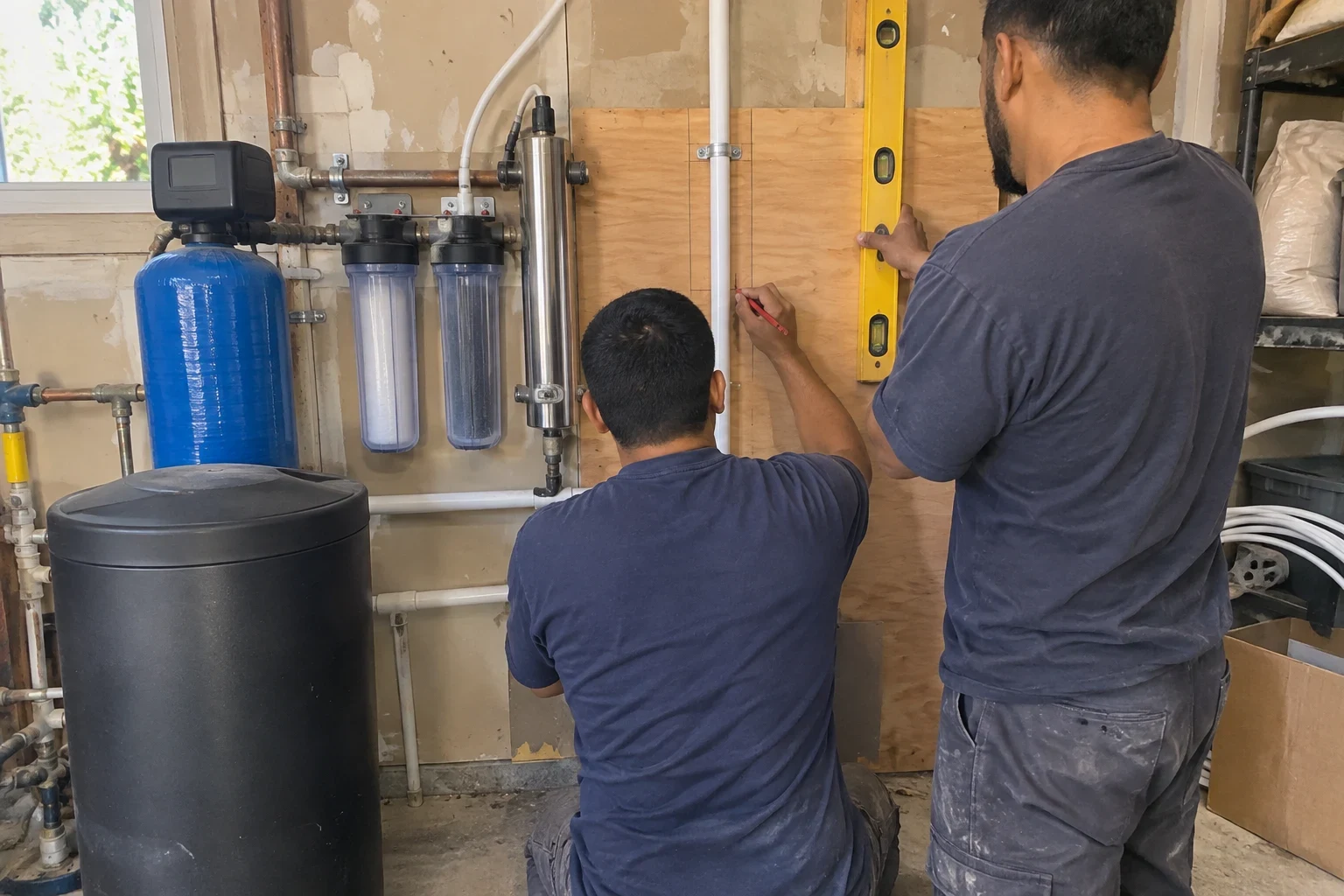
We turn the water off for a short time, plumb in the system with bypass valves and cover floors and nearby surfaces as we go. Most homes have water again the same day.
- 4
Handover and tidy-up
We flush the system, check for leaks, haul off the packaging and show you how to swap cartridges or check the settings on your own.
What Drives the Price
Free install (we cover the cost), so your money goes to the equipment and keeping it running. The cheapest system to buy is not always the cheapest over five or ten years. On iron-heavy water, a small cartridge setup can need constant changes, while a bigger media tank can run much longer between service visits.
- What your water carries
- Sediment on its own is easy to treat. Iron or sulfur calls for more stages and special media, which adds to the equipment price.
- Household size and peak flow
- A busy home with several bathrooms pulls water quickly at peak times. We size for that demand so showers and appliances hold their normal pressure.
- Cartridge systems or media tanks
- Cartridges are cheaper to buy but must be replaced often. Backwashing media tanks cost more at the start and usually much less to keep up.
- Room and existing pipes
- Tight quarters or old fittings around the pressure tank can mean extra parts and labor time.
Common Questions About Well Filtration
Something not covered here? (310) 362-9655
Should I get my well water lab tested first?
A report is very useful if you already have one. With recent results we can pick media with confidence rather than going on symptoms. Without one, we can still talk through what you are noticing and the options that usually work.
Does the system come with a warranty?
It does. Each unit we install has a free 3-year warranty. Regular upkeep like changing cartridges is not included, and we explain what every part needs before you choose.
Will a filter cut my water pressure?
Not noticeably, if the system fits your household's flow. Pressure loss usually comes from equipment too small for the home or cartridges kept in too long. We prevent both with careful sizing and a written change schedule.
What upkeep comes with a well system?
That depends on the system. On a well, sediment cartridges usually need changing every few months, and media tanks can go much longer between service. We put the schedule in writing so you can compare options by yearly cost as well as purchase price.
Will my kitchen tap give drinking-quality water?
Well filtration takes care of sediment, stains and odor throughout the house. Many homeowners add a reverse osmosis unit for a final polish at the kitchen sink, and our Reverse Osmosis page explains how it works.
Plan a Well System That Lasts
Tell us about your well and what you notice at the tap. We will talk through options with their install cost, upkeep and lifespan laid out plainly.